


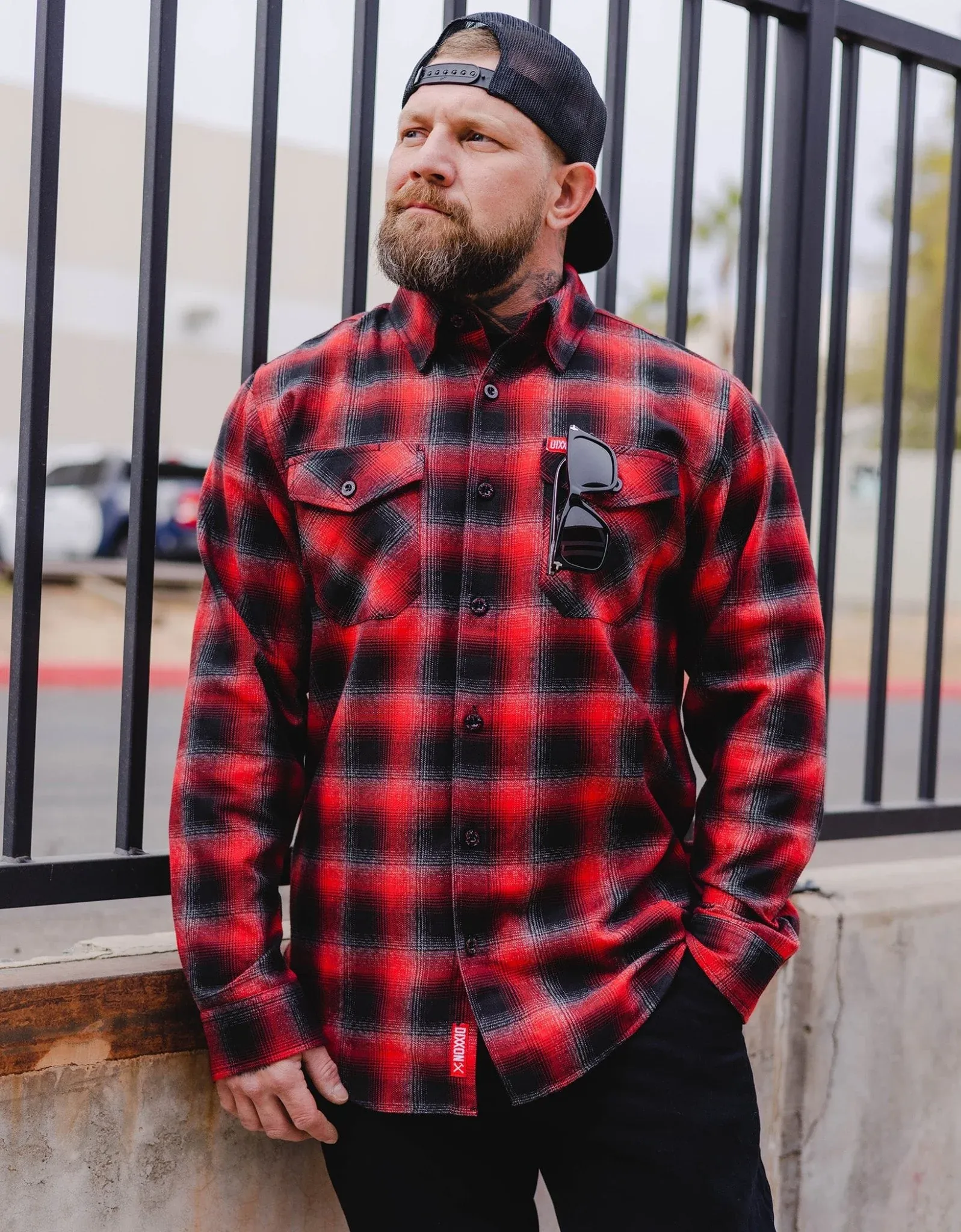
People assume a $60 flannel is just a $20 flannel with better marketing. While, yeah, sometimes that's true, sometimes the extra $40 is the reason the shirt's still in your closet instead of in a donation pile. Here's whether that extra cost is actually worth paying, especially if you're eyeing one of Dixxon's men's flannels.
How Dixxon Flannels Compare to Others
Lighter, fashion-focused flannels lean on softness and a lower price tag, which is great in month one, but it's usually looking worse for wear by month six. Heavier workwear styles put the weight, literally, into fabric density, sturdy seams, reinforced stress points, and hardware built to survive repeated wear.
We proudly fall into that second camp. Our signature D-Tech™ flannels handle the cross-country rides, the daily grind, the crumpled-in-a-duffle-bag treatment, and they hold their shape through all of it.
Are Dixxon Flannel Shirts Actually Durable?
Heavier, tightly woven material handles abrasion better than something thin, no surprises there. What's less obvious is how much construction matters on top of that. Even the toughest fabrics won't hold up if pieces are stitched together haphazardly.
Most flannel brands treat construction as an afterthought. At Dixxon, it's just as deliberate as the fabric choice. Chest pockets and sleeve cuffs are finished with mitered edges to help prevent fraying and puckering, while hidden collar-stay buttons keep the collar sitting where it should after repeated washes. A center box pleat lets you move without pulling a seam apart.

Are They Worth the Price?
Sticker price and actual cost aren't the same number. A $20 flannel replaced every other winter will end up costing way more than a $60 flannel still in your rotation five years from now.
Here's what that extra upfront cost actually buys you:
-
A fabric blend built to resist shrinking and wrinkling, not just plain cotton
-
Mitered edges on the chest pockets and sleeve cuffs that don't fray or pucker with wear
-
Hardware and collar stays that keep the shirt looking fresh
-
A shirt that actually looks good years down the line, not just after the unboxing
-
A fit and style you'll actually reach for again and again
Any flannel can survive ten years hanging behind the winter coats; if it spends nine of them there, you might as well have not purchased it at all, especially if it's just going to fall apart the one time you actually wear it.
Who Gets the Most Value From a Flannel Shirt?
Blue-collar workers, riders, anyone who treats a flannel as a daily layer, see the payoff fast. Heavier fabric and reinforced construction earn their keep when a shirt's in the rotation five days a week.
But Dixxon flannels aren't just for the workwear crowds. A structured flannel doesn't need a job site to make sense; it works just as well for coffee runs and Saturday errands, and it'll outlast (and look way better than) a flimsy shirt you're replacing every year.
So, Should You Buy One?
If the absolute lowest price tag is all that matters, probably not. Plenty of cheaper flannels are out there. They aren't going to last, but they're there.
But if you wear flannels hard and often, or just don't want to think about replacing them, Dixxon is exactly what you're looking for.
A flannel built to take some abuse is worth the extra money.
Explore the Latest Dixxon Flannels
Frequently Asked Questions
Are Dixxon flannels worth the extra cost? If you wear a flannel often, for work, riding, or just as a daily layer, definitely. The heavier D-Tech™ fabric and reinforced construction are built to outlast cheaper flannel shirts, so the cost evens out over years of wear instead of one season.
What makes Dixxon flannels different from cheaper flannel shirts? Construction. Mitered edges, bar-tacked stress points, and hidden collar-stay buttons hold up over years of wear, where lighter, fashion-focused flannels tend to fray, pucker, or lose their shape.